
Cosmetic Dental Bonding in Houston Heights
Cost-Effective Repairs for Damaged Teeth
If you are unhappy with the appearance of your smile, you don’t necessarily have to invest significant time or money on cosmetic dentistry. Cosmetic dental bonding from our Houston Heights cosmetic dentist is a wonderful way to make slight improvements that can enhance your smile in a big way.
At Sunrise Dental Center, our team is happy to offer this popular treatment for patients who don’t have major aesthetic issues affecting their teeth but could still use a little help evening out some imperfections. Keep reading to learn more about dental bonding for our friends and neighbors in and around the Heights area!

Why Choose Sunrise Dental Center for Cosmetic Dental Bonding?
- We Accept Dental Insurance
- Experienced Team of Dentists
- Personalized Cosmetic Treatments
What Is Dental Bonding?
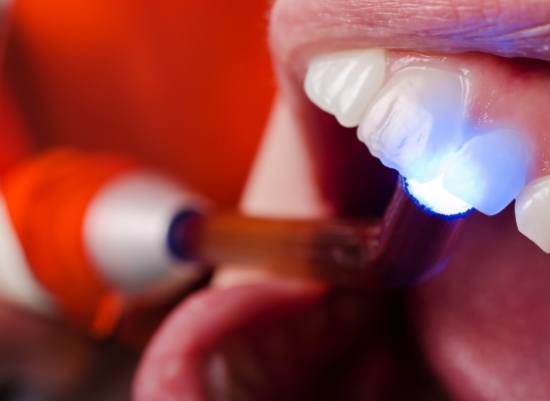
With dental bonding, your dentist uses a tooth-colored resin to rebuild the shape of a chipped, broken, or otherwise damaged front tooth. The material comes with a precise color-matching guide so we can ensure it blends flawlessly with your surrounding tooth enamel.
The composite resin used in dental bonding is made of smooth plastic and glass materials and is biocompatible, meaning it’s totally safe for your body. And once the resin has been applied to the tooth and shaped into its perfect form, the material hardens within seconds under a special UV light.
Dental bonding is:
- Non-invasive
- Pain-free
- Natural looking
- Highly customizable
- Completed within minutes
- Long-lasting
What’s the
Procedure Like?
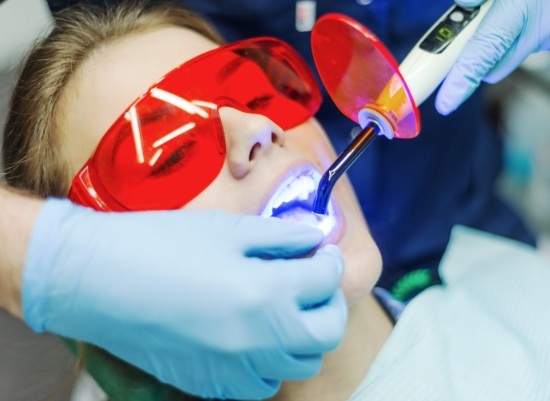
To fix a tooth with dental bonding, your dentist or hygienist will clean the enamel and isolate the tooth to ensure it remains completely dry throughout the procedure. Because it’s a noninvasive, drill-free procedure, you don’t need any anesthesia for dental bonding. A special etching solution is applied to the surface of the tooth to roughen it up and encourage proper bonding between the enamel and resin.
After the tooth has been prepped, your dentist applies the resin and shapes it into its most pleasing appearance. Small adjustments are made as needed to ensure the shape fits perfectly with your unique dentition. Once everything is just as it should be, the resin is hardened under a special light.
Am I a Candidate for Dental Bonding?

Many adults who have sustained slight damage to the teeth that show when they smile are eligible for dental bonding. It can be used to correct most common cosmetic issues, including:
- Chipped or broken teeth
- Uneven teeth
- Slight gaps between teeth
- Teeth that appear to be off-center or misaligned
- Stains that have not responded to teeth whitening
- Short or pointy teeth
When you come in for an appointment with your dentist near Houston Heights, we’ll evaluate the state of your teeth to determine whether or not dental bonding is right for you. If it is, we look forward to getting started right away!
Request an Appointment Today!

If you would like to learn more about your options in cosmetic dentistry, including whether or not dental bonding is right for your smile, we hope you will turn to the experts -- your dentist isn’t far from Houston Heights! Request an appointment at Sunrise Dental Center today.
Dental Bonding FAQs
Does It Hurt to Get Dental Bonding?
Dental bonding isn’t a painful procedure. The teeth being treated don’t require much preparation either. Your dentist will begin by roughening the surface of the affective area with a conditioning liquid. This helps for the bonding material to better adhere to the tooth. You shouldn’t expect any discomfort for the treatment. A local anesthetic isn’t even necessary!
How Long Does Dental Bonding Last?
Dental bonding can improve the appearance of your smile for many years – usually between 5 and 10 years. The longevity of your results will ultimately depend on a couple of different factors, including the location of the bonding and how well you care for it. Here are some steps that you can take to keep your bonded teeth in good condition.
- Avoid tough foods that could crack or chip your bonding.
- Wear a nightguard if you grind your teeth at night.
- Wear a sports guard when you are playing sports.
- Keep up excellent oral hygiene to maintain a clean mouth.
- Avoid heavily pigmented foods that could stain your bonding.
Should You Whiten Your Teeth Before Dental Bonding?
If you want to get dental bonding and teeth whitening, you should let your dentist know. Since the composite material that bonding is made from doesn’t lighten like tooth enamel does, it is typically recommended that teeth whitening takes place first. Then, the bonding material can be color-matched to be the perfect shade for your smile. This way, you won’t end up with uneven tones.
Can Bonded Teeth Get Cavities?
While the bonding material itself will not decay, it doesn’t cover the entire tooth, so bonded teeth are still at risk of tooth decay. No dental procedure is tamper-proof, so it’s just as important that you attend regular cleanings and checkups as well as maintaining an excellent oral hygiene routine at home.
Do I Need Dental Bonding?
You may benefit from dental bonding if you have any of the following dental issues:
- Stained Teeth: If you have small stains on your teeth, dental bonding can be applied to help the area match the rest of your teeth.
- Chipped Cracks & Broken Teeth: For minor chips, cracks, and creaks, dental bonding can be used to rebuild that area of the teeth. No one will be able to tell!
- Small Gaps: If you have small spaces between your teeth, dental bonding may be able to help your teeth appear to be the perfect distance apart.
- Tooth Decay: Dental bonding can be used to rebuild teeth after they have decayed.
I Need a Checkup & Cleaning I Need a Dentist for My Child I am Concerned About Bleeding Gums I Have a Cavity or Broken Tooth I am Missing One or More Teeth I Want to Enhance My Smile I Want a Straighter Smile I am Scared of the Dentist I am in Pain & Need Help I Need Oral & Maxillofacial Surgery View Our Services